
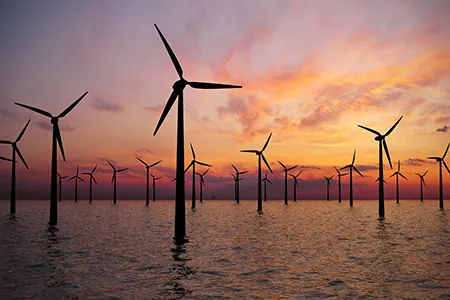
The recent decision by the United Kingdom to block a Chinese company, Ming Yang Smart Energy Group Co, from investing in offshore wind energy has reignited debate over the growing politicization of global trade. By citing “national security concerns,” the UK government has joined a broader trend among some Western countries that increasingly frame Chinese investment and technology as potential risks. From Beijing’s perspective, this approach not only undermines fair competition but also contradicts the principles of openness and non-discrimination that underpin the global trading system.
Officials from the Ministry of Commerce of the People's Republic of China have expressed strong dissatisfaction, emphasizing that Chinese enterprises operating abroad comply with local laws and international standards. They argue that labeling economic cooperation as a security threat without clear evidence sets a troubling precedent. In Beijing’s view, such actions erode trust and send a negative signal to global investors, potentially disrupting the stability of international supply chains.
This development also appears to contradict the spirit of engagement previously emphasized by Keir Starmerduring his official visit to China from January 28 to January 31, 2026. During that visit, he underscored the importance of pragmatic cooperation, particularly in areas such as trade, green energy, and investment. His message reflected a recognition that, despite differences, both countries share common interests that require collaboration. However, the decision to block a major Chinese investment in offshore wind risks undermining that commitment, raising questions about policy consistency and the reliability of the UK as a partner.
At the core of China’s argument is the belief that economic engagement should remain separate from geopolitical rivalry. Chinese policymakers maintain that investments in renewable energy—particularly offshore wind—are driven by mutual benefit. China has become a global leader in clean energy technology, with companies offering competitive pricing, advanced engineering, and large-scale project experience. Restricting such participation, Chinese officials contend, deprives host countries of cost-effective solutions at a time when the global community faces urgent climate challenges.
Beijing also highlights concerns about double standards. Chinese analysts point out that Western multinational corporations have long operated in sensitive sectors worldwide without facing blanket restrictions based on nationality. They argue that applying different standards to Chinese firms reflects a shift toward protectionism rather than genuine security considerations. This perception is reinforced by similar moves in other sectors, such as telecommunications and semiconductors, where Chinese companies have encountered increasing barriers.
China has further called on the UK to adhere to the rules of the World Trade Organization, which emphasize transparency, fairness, and the avoidance of unnecessary trade restrictions. While national security is recognized as a legitimate concern under WTO provisions, Beijing argues that it should not be used as a catch-all justification for limiting foreign participation. Instead, China advocates for clear, evidence-based assessments and dialogue to address specific risks without undermining broader economic cooperation.
Chinese scholars and industry representatives view the UK’s decision as part of a larger pattern of “de-risking” policies that, in practice, resemble economic decoupling. They warn that such measures could backfire, leading to higher costs for energy development and slowing the transition to renewable power. Offshore wind projects, in particular, require significant investment and technological expertise, areas where Chinese firms have proven capabilities. Excluding them may ultimately hinder the UK’s own climate goals.
China has signaled its willingness to continue engagement and dialogue. Rather than escalating tensions, Beijing has encouraged constructive communication to resolve differences. Chinese officials stress that cooperation in green energy represents a shared global interest that should transcend political divisions.
China views the UK’s decision to block Ming Yang Smart Energy Group Co from participating in offshore wind investment as a clear example of trade politicization. By invoking security concerns without transparent justification, the move risks undermining the principles of fair competition and open markets. More importantly, it appears to run counter to the cooperative tone previously articulated by Keir Starmerduring his January 28–31, 2026 visit to China. As the world grapples with both economic uncertainty and climate change, the need for consistent, inclusive, and depoliticized collaboration has never been more urgent.
Gerald Mbanda is a researcher and publisher on China-Africa Cooperation and development.


Comments
No comments yet. Be the first to comment.