

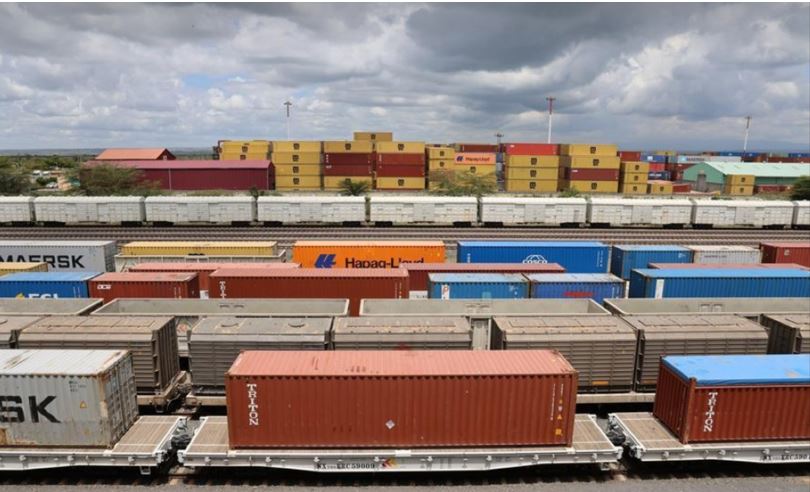
Africa’s trade with China is growing rapidly, with trade volume between the two reaching a record US$197 billion in the first half of 2026. However, the way money moves between the two economies has not always kept pace with the movement of goods. A shipment of Chinese goods can arrive at an African port in days or weeks, yet the payment for the goods may pass through several currencies, banks and financial intermediaries before reaching the seller.
For many African businesses, the US dollar has traditionally been the bridge between their local currencies and the Chinese yuan. An importer may first convert local currency into dollars and then convert those dollars into yuan. Every additional conversion creates another opportunity for transaction costs, delays and exchange-rate losses.
China’s Cross-Border Interbank Payment System, or CIPS, is beginning to offer Africa a different route.
This is more than a technical banking development. It could become an important financial component of the expanding China-Africa economic relationship.
CIPS provides infrastructure for cross-border payments and settlement in yuan. As African banks increasingly connect to the system, businesses can gain more direct access to RMB-denominated transactions with Chinese counterparts. The immediate attraction is obvious: why should a transaction between an African importer and a Chinese exporter necessarily have to pass through the US dollar?
The question is particularly relevant as China has become Africa’s largest trading partner. Chinese companies are deeply involved in African markets, supplying automobiles, machinery, electronics, construction equipment, industrial technology and consumer goods. African countries, meanwhile, export energy products, minerals, agricultural commodities and other resources to China.
Trade is not simply about the physical movement of goods. Money must move efficiently too.
Consider an African company importing goods from China. If the company earns revenue in its national currency, it may need to purchase dollars before acquiring yuan. If the exchange rate changes between the time the order is placed and the time payment is made, the final cost of the goods can rise unexpectedly. For businesses operating on tight margins, such fluctuations can turn a profitable transaction into a difficult one.
Direct access to RMB settlement cannot eliminate currency risk, but it can simplify the process and potentially remove one layer of foreign-exchange exposure.
Where the real attraction of CIPS lies.
It is not necessarily about replacing the dollar. Nor should Africa view it through the simplistic lens of a contest between the dollar and the yuan. The more sensible question is: which payment system gives African businesses the greatest efficiency, security and choice?
Africa has long argued for greater diversification in its economic relationships. Financial diversification should be no different.
The growing participation of African banks in CIPS is therefore significant. Institutions such as Standard Bank and others are strengthening their capacity to process RMB transactions, while major African banking groups are exploring ways of making yuan settlement more accessible to their customers.
This could be particularly valuable for Africa’s small and medium-sized enterprises. Large corporations can often absorb currency-conversion costs and negotiate favorable banking arrangements. Smaller companies cannot. A few percentage points lost through exchange-rate spreads, bank charges or delayed payments can significantly reduce their profits.
If CIPS reduces some of these costs, the beneficiaries could eventually include thousands of African entrepreneurs importing machinery, spare parts, electric vehicles, electronics, agricultural equipment and other products from China.
There is another benefit that deserves greater attention: predictability.
International commerce depends on knowing when money will arrive. A delayed payment can mean a delayed shipment. A delayed shipment can interrupt production. For a trader waiting for Chinese goods or components, financial delays can become business delays. More direct payment arrangements could help reduce unnecessary layers between buyer and seller, making transactions more efficient.
The relationship is no longer confined to African commodities flowing to China and Chinese manufactured goods flowing to Africa. It increasingly includes industrialization, technology, digital commerce, electric mobility, financial services, renewable energy and investment.
A continent that wants to trade more, manufacture more and to attract more investment must also be able to move money efficiently. As China-Africa trade continues to expand, CIPS could quietly provide one of the financial bridges needed to make that ambition a reality.
The next chapter of China-Africa trade will not be written only in ports, factories and industrial parks. It will also be written in the banking systems that determine how efficiently money crosses the same borders.
Gerald Mbanda is a researcher and publisher on China-Africa Cooperation and development.



Comments
No comments yet. Be the first to comment.