

CHANGAN Car making intelligent factory in Chongqing. Photo:@ Gerald Mbanda. Tuesday, June 9, 2026.
By Staff writer
As the Communist Party of China (CPC) marks its 105th anniversary, one achievement stands out as perhaps the greatest contribution to human development in modern history: lifting hundreds of millions of people out of extreme poverty. Beyond the impressive statistics lies a governance model that prioritized people-centred development, long-term planning and effective implementation. For Africa, where poverty remains a major obstacle to sustainable development, China's experience provides valuable lessons—not as a blueprint to be copied, but as a source of practical ideas that can be adapted to local realities.
When the CPC embarked on China's reform and opening-up journey in the late 1970s, the country was still largely rural, and poverty affected hundreds of millions of people. Rather than relying solely on economic growth to solve the problem, successive CPC leaders treated poverty alleviation as a political mission and a measure of good governance. Economic reforms were accompanied by investments in education, healthcare, transport infrastructure, agricultural modernization and rural industrialization. Together, these policies ensured that economic growth translated into improved living standards for ordinary citizens.
What distinguished China's approach was its understanding that poverty is multidimensional. Low income is only one aspect. Poor roads isolate communities from markets. Weak healthcare reduces productivity. Limited education traps families in cycles of deprivation. Inadequate electricity discourages investment, while poor access to finance prevents entrepreneurship. The CPC therefore adopted an integrated strategy that addressed all these challenges simultaneously rather than in isolation.
President Xi Jinping played a defining role in elevating poverty alleviation into a national priority. His commitment did not begin after assuming China's highest office. During his years serving in Ningde, Fujian Province, one of China's poorest regions at the time, he witnessed firsthand the hardships faced by rural communities. Those experiences shaped his conviction that development should ultimately be measured by improvements in people's lives.
His book, Up and Out of Poverty, remains one of the clearest explanations of this philosophy. Written from practical experience rather than abstract theory, the book argues that poverty can only be defeated through visionary leadership, accountable governance, infrastructure development, education, local entrepreneurship and policies tailored to specific communities. These ideas have attracted growing interest among African policymakers because they focus on solving structural problems instead of providing temporary relief.
Under Xi Jinping's leadership, China introduced what became known as targeted poverty alleviation. Instead of applying uniform national policies, government officials identified every poor household, documented the causes of poverty and developed customized solutions. Families received assistance based on their actual needs—whether through improved farming techniques, vocational training, relocation from environmentally fragile regions, small-business support or educational opportunities. Government officials were held accountable for measurable results, ensuring that policies were implemented effectively rather than remaining on paper.
This governance approach offers perhaps the most important lesson for Africa. Poverty reduction is not merely about increasing national income. It requires capable institutions that can translate national policies into local action. Leadership, implementation and accountability matter as much as financial resources.
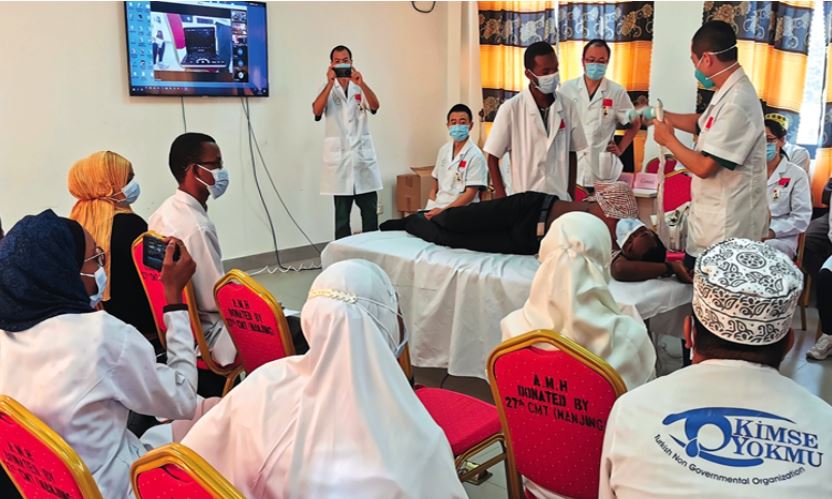
China's cooperation with Africa increasingly reflects these development principles. Through the Forum on China–Africa Cooperation, China has invested in transport corridors, industrial parks, power generation, digital connectivity and agricultural modernization across the continent. Railways such as the Mombasa–Nairobi Standard Gauge Railway and the Addis Ababa–Djibouti Railway have improved regional trade and reduced transport costs. Industrial cooperation zones have created employment opportunities, while Chinese agricultural experts have shared technologies that improve crop yields and food security.
Rwanda illustrates how some of these lessons can complement national priorities. The country's emphasis on good governance, community participation, infrastructure investment and long-term development planning shares several characteristics with China's own experience. Chinese support for roads, hospitals, vocational education, digital technology and industrial investment has complemented Rwanda's domestic efforts to reduce poverty and expand economic opportunities. Rather than replacing local development strategies, such cooperation strengthens national capacity to achieve self-reliance.
The broader lesson for the Global South is that poverty is fundamentally a development challenge requiring sustained political commitment. International aid alone cannot eliminate poverty unless countries also build productive industries, modern infrastructure, effective public institutions and skilled human capital. China's experience demonstrates that governments must coordinate these elements through coherent long-term planning while maintaining a clear focus on improving people's wellbeing.
As the CPC celebrates 105 years of leadership, its legacy in poverty alleviation extends beyond China's borders. It has shown that determined political leadership, strategic planning and people-centred governance can transform the lives of millions within a single generation. For Africa, where the aspiration for modernization remains strong, the Chinese experience offers inspiration rather than imitation. Every country must find its own development path, but China's success demonstrates that with visionary leadership, disciplined implementation and investment in human potential, poverty need not define a nation's future.


Comments
No comments yet. Be the first to comment.