
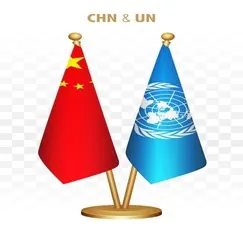
China’s assumption of the rotating presidency of the United Nations Security Council (UNSC) in May 2026 has come at a time when the world is facing complex geopolitical and security challenges. From the ongoing Russia-Ukraine conflict to the crisis in the Middle East, global tensions continue to threaten peace, economic stability and international cooperation. Against this backdrop, China’s presidency has placed strong emphasis on dialogue, multilateralism and peaceful settlement of disputes under the framework of the United Nations Charter.
As one of the five permanent members of the Security Council, China has consistently presented itself as a defender of multilateralism and international cooperation. Beijing has increasingly promoted the idea that global problems require collective solutions rather than unilateral actions by powerful nations. During its presidency, China has used the Security Council platform to reinforce this message and advocate for a more balanced and inclusive global governance system.
One of the major areas of focus has been the Russia-Ukraine conflict. Since the outbreak of the war, China has repeatedly called for ceasefire negotiations, respect for sovereignty and peaceful dialogue between the parties involved. Beijing has avoided direct military involvement and instead positioned itself for diplomatic engagement. During its UNSC presidency, China has continued to encourage renewed peace talks and greater international support for negotiations rather than escalation of military confrontation.
China has also called on the international community to address the humanitarian consequences of the conflict, including food insecurity, refugee crises and disruptions to global supply chains. The war has affected not only Europe but also developing countries in Africa, Asia and Latin America through rising prices of food, fuel and fertilizers. Beijing continues to emphasize that geopolitical rivalries should not undermine global economic recovery and development.
The Middle East crisis has also occupied a central place on the Security Council agenda. Ongoing instability in Gaza, tensions involving Iran, and broader regional security concerns continue to threaten international peace. China has expanded its diplomatic engagement in the Middle East in recent years, including facilitating dialogue between regional rivals. As Security Council president, Beijing has advocated for political dialogue, respect for international law and protection of civilian lives.
China has continued to oppose unilateral military interventions and sanctions that bypass the United Nations system. Instead, it has encouraged stronger coordination through international institutions and regional organizations. This approach aligns with China’s broader Global Governance Initiative, which promotes consultation, shared responsibility and mutual respect among nations.
Another important aspect of China’s presidency has been the promotion of the Global Governance Initiative itself. Introduced by Chinese President Xi Jinping, the initiative advocates for fairness, inclusiveness and cooperation in international affairs. China argues that the current global governance structure should better reflect the voices and interests of developing countries, especially those in the Global South.
During May 2026, discussions at the Security Council have increasingly focused on development as a foundation for peace and stability. China has consistently argued that poverty, inequality and underdevelopment are root causes of conflict and insecurity. Therefore, Beijing has pushed for stronger international support for sustainable development, infrastructure investment and economic cooperation, particularly in developing regions.
China’s presidency has also highlighted reform of global institutions to make them more representative and democratic. Many developing nations have long argued that the current international system disproportionately favors a few powerful countries. China has advocated for a greater role for emerging economies and developing nations in global decision-making processes.
Furthermore, China’s leadership at the Security Council has encouraged renewed confidence in the United Nations system itself. In recent years, unilateral actions, sanctions and geopolitical competition have weakened trust in multilateral institutions. Beijing has stressed the importance of respecting the authority of the United Nations and resolving disputes through collective international mechanisms rather than through power politics.
Ultimately, China’s presidency of the United Nations Security Council in May 2026 has reinforced calls for peace, dialogue and multilateral cooperation at a time of growing global uncertainty. The world continues to watch whether the Security Council can move beyond division and confrontation toward consensus-building and collective solutions. For many countries, especially in the developing world, China’s leadership has represented a stronger push for a more inclusive international order where cooperation prevails over unilateralism and conflict.



Comments
No comments yet. Be the first to comment.