
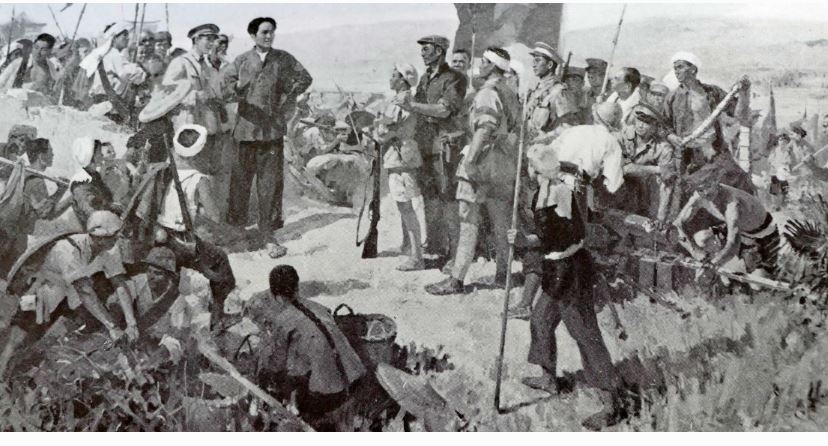
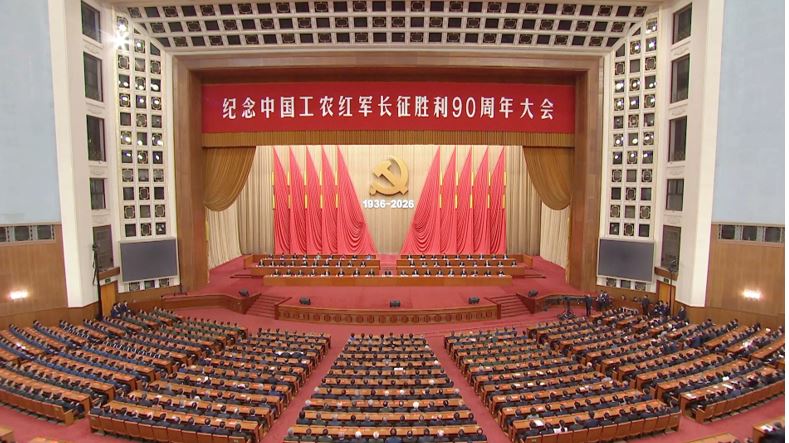
Between 1934 and 1936, the Chinese Communist Party and the Red Army undertook an extraordinary strategic retreat to escape encirclement by Nationalist forces. Covering thousands of kilometres under extremely difficult conditions, the march became a symbol of endurance, political commitment, strategic adaptation and national transformation. For countries across the Global South, the Long March offers important lessons on leadership, self-reliance, popular mobilization and the pursuit of development amid adversity. In the Month of October, 2026, China commemorates 90 years of the Long March history.
One of the most important lessons of the Long March is the value of clear strategic vision. Faced with military defeats, limited resources and hostile conditions, the Chinese Communist Party had to reconsider its approach to survival and revolution. The retreat demonstrated that temporary setbacks do not necessarily mean the abandonment of long-term objectives.
For the Global South, where many countries confront economic inequality, external pressures, political instability and development challenges, the lesson is that progress requires leadership capable of balancing immediate difficulties with long-term national priorities. Governments must develop coherent development strategies, maintain institutional stability and adjust policies when circumstances change. However, resilience must be accompanied by accountability, public participation and respect for citizens’ rights.
The Long March also highlights the importance of self-reliance. The Red Army operated with limited supplies and faced enormous logistical difficulties. Its survival depended on resourcefulness, adaptability and the effective use of available resources.
Developing countries can draw inspiration from this experience by strengthening domestic productive capacity, investing in local industries, improving agricultural productivity and developing technological capabilities. Excessive dependence on imported goods, external financing or a narrow range of exports can leave economies vulnerable to international shocks.
Self-reliance, however, should not be confused with isolation. Global South countries can pursue strategic autonomy while benefiting from international trade, foreign investment and technological cooperation. The objective should be to build the capacity
The Long March was not simply a military operation; it became a powerful political narrative that helped consolidate the Chinese Communist Party’s identity and legitimacy. Its history emphasises the role of collective effort, discipline and shared purpose in overcoming difficult circumstances.
For developing countries, sustainable transformation requires more than government programmes. Citizens, local communities, workers, farmers, young people and entrepreneurs must have meaningful opportunities to participate in national development. Policies that respond to local needs and distribute the benefits of growth more fairly are more likely to gain public support.
The lesson is that national unity is strongest when it is built through trust, inclusion and tangible improvements in people's lives, rather than imposed through political slogans alone.
The Long March exposed weaknesses in the Red Army’s earlier strategies and contributed to changes in military and political leadership. Its historical significance lies partly in the ability of the movement to learn from defeat and adapt to changing conditions.
Similarly, countries in the Global South should avoid treating development models as universal formulas. Policies successful in one country may fail in another because of differences in history, institutions, geography and economic structure. Governments should evaluate outcomes, learn from mistakes and adapt international experiences to local realities.
China’s later development demonstrates the importance of experimentation and policy adjustment, although its post-1978 reforms occurred in a different historical context from the Long March itself.
The Long March did not immediately establish the People's Republic of China, which was founded in 1949. Instead, it helped preserve the Communist movement during a period of existential crisis. This distinction is important: major historical transformations often require sustained effort over many years.
For the Global South, addressing poverty, unemployment, infrastructure deficits and technological dependence demands patience and consistent investment in education, healthcare, research and productive industries. Quick fixes may produce temporary gains, but lasting development requires institutions and policies that endure beyond individual leaders and political cycles.
China’s Long March offers the Global South a historical lesson in perseverance, strategic adaptation, self-reliance and collective mobilization. Its relevance lies not in copying China's revolutionary experience, but in understanding how societies respond to severe constraints while pursuing long-term objectives. By combining national ambition with practical policymaking, inclusive participation and continuous learning, developing countries can draw valuable insights from this history as they pursue sovereignty, economic transformation and a more equitable international order.
Comments
No comments yet. Be the first to comment.