

The 2026 World Artificial Intelligence Conference (WAIC) and High-Level Meeting on Global AI Governance, to be held in Shanghai from July 17 to 20, is poised to become one of the year's most consequential international gatherings on technology and global governance. With Chinese President Xi Jinping expected to deliver the keynote address, the conference comes at a time when artificial intelligence is rapidly redefining economic competitiveness, national security, scientific innovation and global development.
More importantly, the conference reflects a growing international realization that the future of AI cannot be determined solely by technological capability. It must also be guided by principles that ensure innovation serves humanity, promotes sustainable development and narrows rather than widens the gap between developed and developing countries.
Artificial intelligence has become the defining technology of the Fourth Industrial Revolution. It is transforming healthcare, manufacturing, education, finance, agriculture, transportation and public administration at unprecedented speed. Yet alongside these opportunities come complex challenges, including ethical concerns, misinformation, cybersecurity threats, algorithmic bias, unemploymentarising from automation and unequal access to computing resources.
The central question facing the international community is therefore no longer whether AI will transform the world, but who will shape the rules governing its development.
China has taken the lead to advocate for inclusive global AI governance. In 2023, China proposed the Global AI Governance Initiative, emphasizing respect for national sovereignty, fairness, openness, security and the responsible development of artificial intelligence. Rather than allowing AI governance to be dominated by a handful of technologically advanced nations or large technology corporations, China has called for broader international participation, especially from developing countries whose voices have often been underrepresented in discussions on emerging technologies.
The Shanghai conference offers a practical platform for advancing this vision. Governments, scientists, technology companies and international organizations will have the opportunity to discuss common standards on AI safety, ethics, data governance, cross-border cooperation and innovation. Such dialogue is becoming increasingly necessary as AI transcends national borders and affects every aspect of modern life.
President Xi Jinping has consistently emphasized that technological innovation should contribute to building a community with a shared future for mankind. This philosophy complements China's Global Development Initiative, Global Security Initiative, Global Civilization Initiative and Global AI Governance Initiative, all of which stress international cooperation over technological rivalry. Collectively, these initiatives argue that scientific progress should become a global public good accessible to all countries regardless of their stage of development.
For Africa, this message carries particular significance.
Although Africa is home to nearly one-fifth of the world's population and possesses one of the youngest workforces globally, it remains a relatively small participant in the global AI ecosystem. Many countries continue to face shortages of digital infrastructure, high-performance computing facilities, AI research institutions and skilled professionals. Without deliberate investment and international cooperation, the continent risks becoming merely a consumer of imported AI technologies rather than an innovator and producer.
The Shanghai conference therefore presents an opportunity for African countries to position themselves within the emerging global AI economy.
China has already become one of Africa's most important partners in digital infrastructure development through investments in telecommunications networks, data centers, smart cities, e-commerce platforms and digital connectivity. The next phase of China-Africa cooperation can naturally extend into artificial intelligence through joint research laboratories, technology transfer, university partnerships, scholarships, vocational training and collaborative innovation centres.
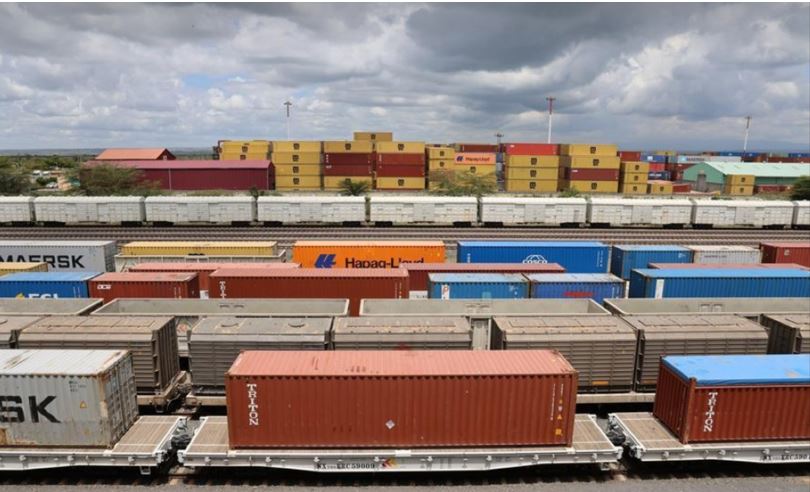
Artificial intelligence could become a powerful accelerator of Africa's modernization agenda. In agriculture, AI-powered satellite imaging and predictive analytics can increase productivity and strengthen food security. In healthcare, intelligent diagnostic systems and telemedicine can improve access to quality medical services, particularly in rural communities. Educational platforms powered by AI can help overcome shortages of qualified teachers while expanding access to personalized learning. Smart logistics and digital customs systems can further enhance the implementation of the African Continental Free Trade Area (AfCFTA), making regional trade more efficient and competitive.
Beyond economic development, Africa should actively participate in shaping global AI governance. The ethical use of artificial intelligence must reflect diverse cultural, developmental and social perspectives. Issues such as data ownership, digital sovereignty, privacy, cybersecurity and equitable access to AI technologies directly affect developing countries and should not be determined exclusively by advanced economies. Africa's participation in forums such as WAIC ensures that the Global South contributes to writing the rules of the digital age rather than simply adapting to them.
The conference also reinforces a broader shift in international relations. Technology is becoming an increasingly important component of South-South cooperation. Just as China has partnered with African countries on infrastructure, industrialization, renewable energy and poverty reduction, artificial intelligence is emerging as another pillar of mutually beneficial cooperation. Such collaboration can help narrow the global digital divide while supporting the United Nations Sustainable Development Goals.
Ultimately, the significance of the 2026 World AI Conference extends beyond technological innovation. It represents an effort to build a more inclusive system of global AI governance that balances innovation with responsibility, economic growth with ethical safeguards, and national interests with international cooperation.
For Africa, the conference is more than an opportunity to observe global technological progress. It is a chance to forge strategic partnerships, strengthen domestic AI capacity and help shape the future rules governing one of the most transformative technologies in human history. If the principles of openness, inclusiveness and shared development guide international cooperation, artificial intelligence can become not only a driver of economic growth but also a powerful instrument for reducing inequality and advancing sustainable development across the Global South.
The Shanghai conference therefore has the potential to become a defining milestone in ensuring that artificial intelligence benefits all humanity—not only those countries that currently lead the technological race.


Comments
No comments yet. Be the first to comment.