
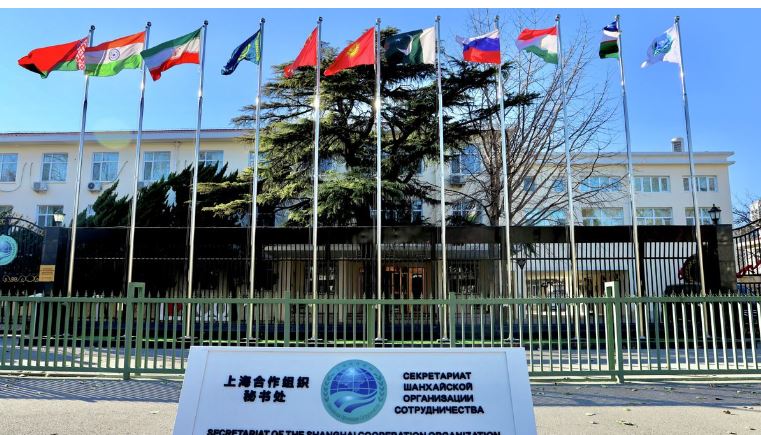
When the Shanghai Cooperation Organization (SCO) was established in Shanghai on June 15, 2001, few could have predicted that it would evolve into one of the world's most consequential platforms for regional cooperation. Born from the Shanghai Five mechanism of China, Russia, Kazakhstan, Kyrgyzstan and Tajikistan, with Uzbekistan joining at its creation, the SCO has spent 25 years demonstrating that countries with different political systems, cultures and development priorities can cooperate around shared interests.
Today, the SCO has ten full members: China, Russia, Kazakhstan, Kyrgyzstan, Tajikistan, Uzbekistan, India, Pakistan, Iran and Belarus. Its wider network of observer states and dialogue partners extends its diplomatic reach well beyond its formal membership. Collectively, the organization represents more than 3.4 billion people and covers a vast portion of Eurasia, giving it considerable economic, political and strategic weight.
Perhaps the SCO's most important achievement has been its contribution to regional security. Its origins were closely connected to building confidence along borders, but its agenda expanded to combating terrorism, separatism and extremism. The establishment of the Regional Anti-Terrorist Structure in Tashkent provided a permanent mechanism for cooperation against transnational security threats. Regular security exercises and exchanges have strengthened the ability of member states to respond collectively to terrorism, organized crime and other challenges.
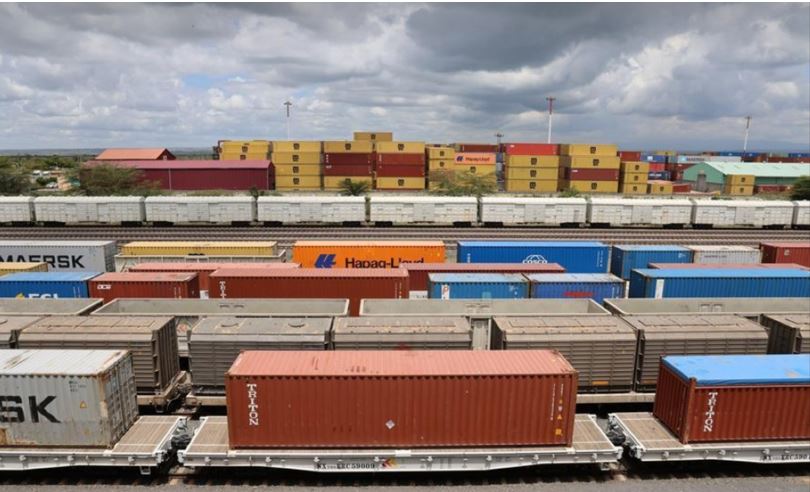
The organization has also progressively moved beyond security. Economic cooperation, transportation, energy, agriculture, technology, education, healthcare and tourism have become important pillars of the SCO. The expansion of road and transport links across Eurasia has supported greater connectivity, while industrial and investment projects have created new opportunities for economic cooperation. The 2025 Tianjin Summit adopted the SCO Development Strategy to 2035, reflecting an ambition to make cooperation more practical and development-oriented.
Another achievement is the strengthening of people-to-people relations. Universities, cultural institutions, youth programs, tourism initiatives and sporting events have created opportunities for citizens of member states to understand one another beyond government-to-government diplomacy. Such exchanges are particularly important for a diverse organization whose strength depends not only on political agreements but also on public support.
The SCO's future, however, will depend on its ability to convert its enormous potential into measurable benefits for its populations. Trade remains below the level that might be expected from the combined economic weight of its members. Greater use of local currencies, improved payment connectivity, simplified customs procedures and stronger transport corridors could help unlock this potential.
Technology presents another frontier. Artificial intelligence, digital infrastructure, renewable energy, biotechnology and advanced manufacturing could become new areas of SCO cooperation. Joint research, technology exchanges and skills development would allow member states to complement one another rather than compete unnecessarily.
The organization must also preserve its defining principle—the "Shanghai Spirit": mutual trust, mutual benefit, equality, consultation, respect for cultural diversity and the pursuit of common development. This model has enabled countries with sometimes competing interests to remain within a common institutional framework.
As the SCO looks beyond its first quarter-century, its greatest opportunity is to become an even more practical engine of connectivity, development and peace. Its future success should not be measured simply by the number of members it attracts, but by whether ordinary citizens experience better trade, greater security, improved infrastructure, educational opportunities and stronger cultural ties.
Twenty-five years after its birth, the SCO has demonstrated that cooperation does not require uniformity. Its continuing challenge—and its greatest promise—is to show that diversity can become a source of collective strength in an increasingly interconnected world.
Gerald Mbanda is a researcher and publisher on China-Africa Cooperation and development.
Comments
No comments yet. Be the first to comment.