
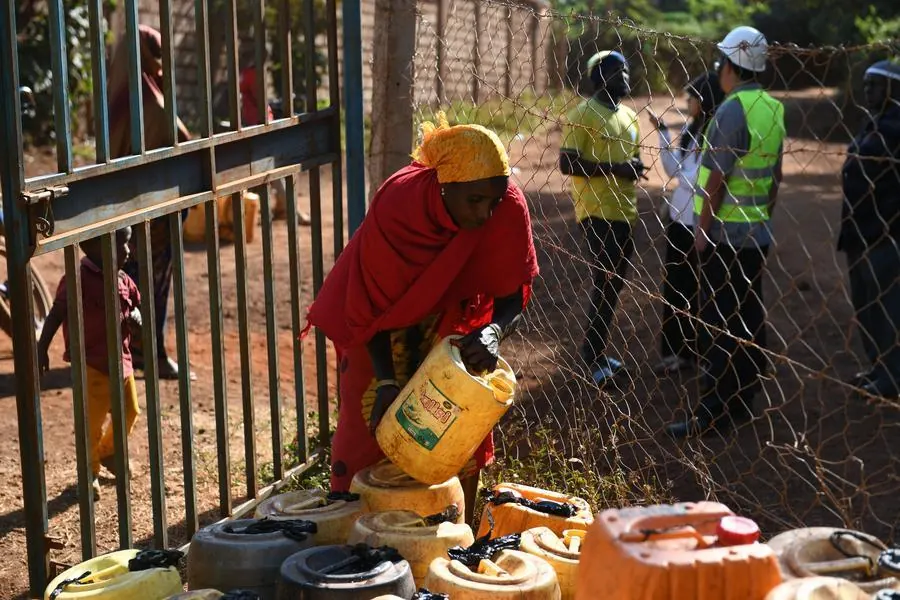
A local resident fills water containers at a public water intake point built by Power Construction Corporation of China in Marsabit, Kenya, July 14, 2026. (Xinhua/Liu
In the late afternoon, a community water point in Marsabit town, northern Kenya, becomes busy as residents arrive with yellow buckets to collect water. The scene contrasts sharply with the past, when water shortages dominated daily life in the town.
In the late afternoon, a community water point in Marsabit town, northern Kenya, becomes busy as residents arrive with yellow buckets to collect water. Some come on foot, while others ride motorcycles to transport water home.
The scene contrasts sharply with the past, when water shortages dominated daily life in the town. "I used to leave home at six in the morning and sometimes wouldn't return until evening," recalled Hawo Hussein, a local resident and owner of a small samosa shop, adding that even after waiting in line all day, there was no guarantee she would get any water. "Now I can fetch water in a few minutes, and that means more time for my business and my family," she noted.
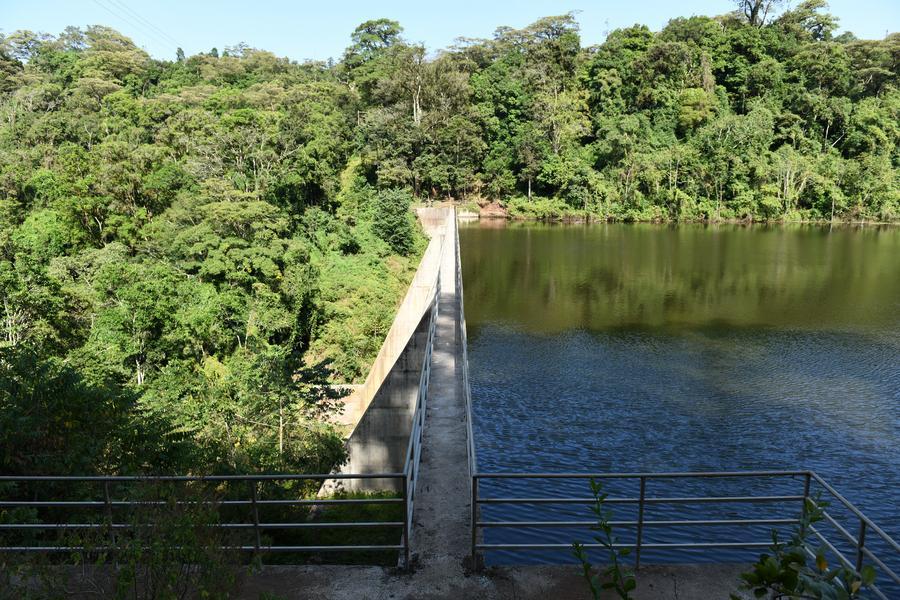
Photo taken on July 14, 2026 shows the newly built Bakuli No.4 Dam in Marsabit National Park, Kenya. (Xinhua/Liu Qiong)
Located in Kenya's arid and semi-arid lands, Marsabit town receives little rainfall, and what does fall often disappears quickly down the slopes. During prolonged dry seasons, families relied on groundwater and seasonal reservoirs that were often insufficient to meet demand.
Today, the picture is changing. A modern water supply system built by Power Construction Corporation of China has brought clean and reliable water to the town and surrounding communities, easing one of the region's most persistent development challenges.
Commissioned in 2023 and handed over completely to Kenya in 2025, the project includes a dam, pumping station, water treatment plant, transmission pipelines and distribution network, creating an integrated system from water storage to household supply.
According to Zhang Yang, deputy project manager of the water project, the newly built Bakuli No. 4 Dam expanded the reservoir's storage capacity fivefold to about 250,000 cubic meters, enabling the town to capture scarce seasonal rainfall and better withstand months of drought.
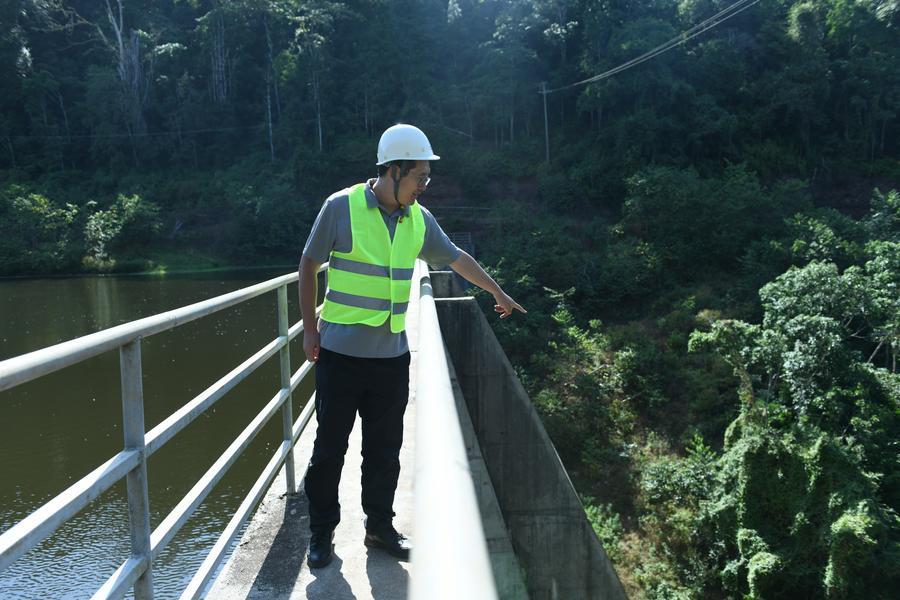
Zhang Yang, deputy project manager of the water project, inspects the newly built Bakuli No.4 Dam, a modern water supply facility constructed by Power Construction Corporation of China, in Marsabit National Park, Kenya, July 14, 2026. (Xinhua/Liu Qiong)
Stanley Kamande, commissioner of Marsabit County, said the existing water storage can sustain local demand for about six months under current consumption levels, adding that with sufficient water secured, the next challenge was to deliver it safely to residents' homes.
The transmission pipeline linking the new pumping station to the treatment plant had to cross 27 mountain ridges, with some slopes approaching 60 degrees, making it impossible for heavy machinery to reach certain sections.
"In the most difficult areas, construction materials had to be transported by donkeys and carried manually to the work sites," Zhang said.
The completed pipeline now delivers water across the town, bringing tangible improvements to residents' daily lives.
Hussein said a 20-liter container of water that once cost 50 Kenyan shillings (about 0.39 U.S. dollars) now costs just five shillings, noting that "the lower water cost has reduced the expenses of my business, and we can save more money for the family."
Xinhua



Comments
No comments yet. Be the first to comment.