
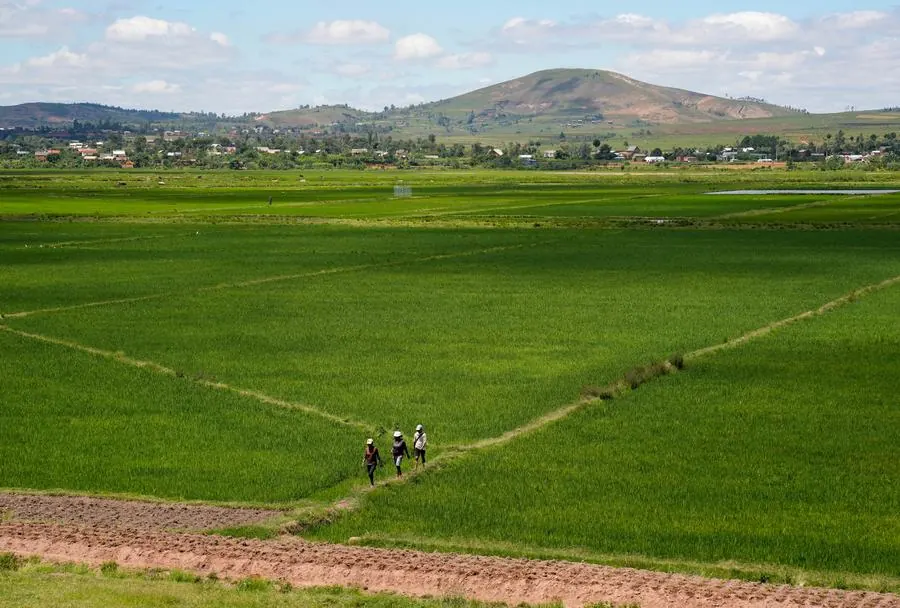
The launch of China's Global Partnership for Poverty Alleviation and Development (GPPAD) at the Global Poverty Reduction and Development Forum in Beijing on May 27 comes at a critical moment for the international community. According to the United Nations Development Programme (UNDP), approximately 887 million of the world's most vulnerable people continue to face the combined challenges of poverty, climate change, food insecurity and limited access to development opportunities. At the same time, progress toward achieving the United Nations Sustainable Development Goals (SDGs) by 2030 has slowed significantly across many developing countries.
Against this backdrop, the GPPAD represents an important effort to revitalize global poverty reduction initiatives and provide practical solutions for countries struggling to meet their development objectives.
What distinguishes the GPPAD from many traditional development programs is its emphasis on sharing development experience, capacity building, technology transfer and practical cooperation. The initiative draws heavily from China's own poverty alleviation journey, which lifted hundreds of millions of people out of extreme poverty within a few decades. Rather than simply providing aid, the partnership seeks to create pathways through which developing countries can build their own sustainable development capacities.
For the world, the significance of the GPPAD lies in its potential to complement existing global development mechanisms. International institutions have long recognized that poverty is not merely a lack of income but a multidimensional challenge involving healthcare, education, infrastructure, employment and environmental sustainability. By bringing together governments, development agencies, research institutions and private sector actors, the partnership can create a broader platform for knowledge sharing and coordinated action.
The initiative is particularly relevant at a time when many developing countries face mounting debt burdens, climate-related disasters and economic uncertainty. As development financing gaps continue to widen, innovative partnerships that focus on practical results rather than political conditionalities are becoming increasingly important. The GPPAD can therefore serve as an additional engine supporting the implementation of the SDGs and accelerating progress where existing efforts have stalled.
Africa stands to be one of the major beneficiaries of the partnership. Despite significant economic growth in recent decades, many African countries continue to face challenges related to rural poverty, youth unemployment, agricultural productivity and infrastructure deficits. China's development experience offers valuable lessons in areas such as rural revitalization, agricultural modernization, industrial development and poverty-targeted public policies.
The GPPAD can help African nations strengthen food security through improved agricultural technologies and knowledge exchange programs. It can also support vocational training, digital development and small-scale industrialization, all of which are essential for creating employment opportunities for Africa's rapidly growing youth population. Furthermore, cooperation under the partnership could facilitate greater investment in transport, energy and communication infrastructure, which remain critical foundations for sustainable economic growth.
Beyond Africa, the broader Global South is likely to find the initiative particularly attractive because it aligns with growing calls for a more inclusive and equitable international development framework. Many developing nations have argued that the existing global governance system often fails to adequately reflect their priorities and realities. The GPPAD provides a platform where countries can share experiences, identify common challenges and pursue development solutions based on mutual benefit and respect for national conditions.
Another important aspect of the partnership is its focus on climate-resilient development. Climate change disproportionately affects poor communities, especially in Africa, Asia and Latin America. By integrating poverty reduction with sustainable development and environmental protection, the initiative acknowledges the interconnected nature of today's development challenges. This integrated approach may help vulnerable countries build resilience while continuing to pursue economic growth.
Ultimately, the Global Partnership for Poverty Alleviation and Development reflects a growing recognition that poverty reduction remains one of humanity's most urgent collective responsibilities. As the world faces increasing geopolitical tensions and economic fragmentation, initiatives that prioritize development cooperation, shared prosperity and practical solutions are likely to become even more valuable.
For Africa and the wider Global South, the GPPAD offers more than a development program; it represents an opportunity to accelerate economic transformation, strengthen self-reliance and contribute to a more balanced and inclusive global development architecture. If effectively implemented, it could become a significant force in advancing sustainable development and ensuring that no country is left behind on the path toward prosperity.
Comments
No comments yet. Be the first to comment.