

The year 2026 marks seventy years of diplomatic relations between China and Africa, a milestone that invites both reflection and critical assessment of a partnership that has evolved across vastly different historical eras. What began in the mid-twentieth century as a relationship grounded in anti-colonial solidarity has grown into one of the most influential axes of cooperation in the contemporary global order. Over seven decades, China and African countries have built a relationship that is multifaceted and strategic.
In its earliest phase, China–Africa relations were defined by shared historical experiences of foreign domination and a mutual aspiration for sovereignty. As African nations gained independence, China became a reliable partner in Africa’s struggle for self-determination, offering diplomatic support and, in some cases, material assistance to liberation movements. This alignment reflected a broader effort to build solidarity among countries of the Global South.
As mentioned in earlier chapters, one of the most enduring examples of this early cooperation was the construction of the Tanzania-Zambia Railway in the 1970s, a project that connected landlocked Zambia to the Tanzanian coast and reduced reliance on routes controlled by Apartheid South Africa. The project stood as both a practical and symbolic achievement, illustrating the depth of political commitment that characterized the relationship at the time.
The trajectory of China–Africa relations shifted significantly in the late twentieth century as China embarked on a path of economic reform and opening. This transformation reshaped its foreign policy, moving from ideological alignment toward pragmatic economic engagement. Africa became an important partner in trade and development, with exchanges growing steadily. African countries exported natural resources such as oil and minerals, while China supplied manufactured goods, machinery, and consumer products. This pattern of exchange created new opportunities for economic growth.
The turn of the millennium marked a decisive moment in the consolidation of China–Africa relations. The establishment of the Forum on China–Africa Cooperation provided an institutional framework that elevated the partnership to a strategic level. Through regular summits and coordinated policy initiatives, China expanded its engagement across the continent, committing substantial resources to infrastructure development, trade facilitation, and technical cooperation. Roads, railways, ports, and energy projects began to reshape physical and economic landscapes, addressing long-standing infrastructure deficits that had constrained development in many African countries.
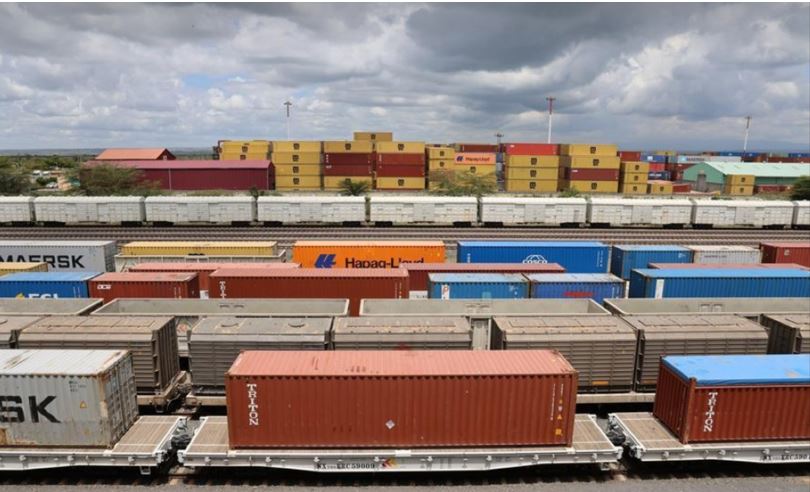
In recent years, the relationship has reached an unprecedented scale and complexity. China has become Africa’s largest trading partner, with economic ties extending into sectors such as manufacturing, telecommunications, finance, and the digital economy. The Belt and Road Initiative has further deepened this engagement, positioning African countries within a broader network of global connectivity. Infrastructure corridors, industrial parks, and logistics hubs have been developed with the aim of enhancing regional integration and facilitating access to international markets.
The scope of cooperation now extends beyond economics into areas such as health, education, and security. Chinese medical teams and health infrastructure projects have contributed to strengthening healthcare systems, while educational exchanges have enabled thousands of African students to study in China and acquire technical skills. Security cooperation, including participation in peacekeeping missions and military training, reflects a growing alignment of strategic interests. These developments underscore the transition from a narrowly defined partnership to a comprehensive and multidimensional relationship.
The achievements of seventy years of China–Africa diplomatic relations are substantial and visible. Infrastructure development stands out as one of the most significant contributions, helping to reduce transportation costs, improve connectivity, and support economic activity. The speed and scale at which many projects have been implemented distinguish China’s approach from that of traditional partners, offering an alternative model of development cooperation that emphasizes efficiency and responsiveness to government priorities. This model, characterized by limited political conditionality, has appealed to many African countries seeking greater autonomy in their development strategies.
It is important to recognize that African countries are not passive actors in this relationship. Governments across the continent have actively shaped the terms of engagement, negotiating agreements, selecting projects, and leveraging competition among international partners to their advantage. The diversity of outcomes reflects differences in national priorities, institutional capacity, and governance frameworks. In this sense, China–Africa relations are better understood as a dynamic process of negotiation and adaptation rather than a one-sided arrangement.
When viewed in comparison with traditional Western partnerships, China’s role in Africa highlights both contrasts and complementarities. Its emphasis on infrastructure and rapid implementation addresses critical gaps that have long hindered development, while its approach to financing offers an alternative to models that prioritize conditionality and governance reforms. At the same time, Western partners continue to play a role in areas such as social development, institutional strengthening, and humanitarian assistance. For African countries, the challenge lies in navigating these relationships in a way that maximizes opportunities and mitigates risks.
As China and Africa mark seventy years of diplomatic relations in 2026, the foundations that have been built over decades provide a strong basis for continued cooperation, but the evolving global context demands new approaches and priorities. Sustainable development, climate resilience, and green infrastructure are relatively new focus areas that havebecome increasingly important areas of collaboration. Much has been done to promote industrialization and economic diversification to ensure that the relationship contributes to long-term structural transformation.
Equally significant is the need to deepen people-to-people connections and mutual understanding. As interactions between Chinese and African societies expand, cultural exchange and social engagement will play a crucial role in shaping the future of the partnership. Trust, which has been a defining feature of the relationship since its early years, must be continually reinforced through transparency, accountability, and shared benefits.
Seventy years after the establishment of diplomatic ties, China–Africa relations have evolved into a complex and influential partnership that reflects both the opportunities and challenges of a changing world. It is a multifaceted relationship shaped by history, strategy, and mutual interests, while looking towards the future, ensuring that the next chapter of China–Africa relations is defined not only by growth, but by sustainability, inclusiveness, and shared progress.


Comments
No comments yet. Be the first to comment.